
Close Menu
Vodacom Study Blog –  Empowering Learning, Inspiring Success
  • Home
  • Technology
    • AI
    • programming
    • Gadgets
    • Software
    • cybersecurity
  • Finance
    • banking
    • budgeting
    • crypto
    • investing
  • Business
    • Entrepreneurship
    • leadership
    • management
    • marketing
  • Education
    • Learning resources
    • online courses
    • academic guidance
    • academic guidance
    • Learning resources
  • More
    • Business
      • management
      • leadership
      • Entrepreneurship
      • marketing
      • Education
      • academic guidance
      • Learning resources
    • Entertainment
      • celebrity
      • Movies
      • reviews
      • news
      • music
      • TV shows
    • Health & Wellness
      • Fitness
      • lifestyle habits
      • medical advice
      • mental health
    • Lifestyle
      • relationships
      • Daily living
      • habits
      • self-improvement
      • minimalism
    • Sports
      • fitness sports content
      • Game analysis
      • athletes
      • news
    • Home & Garden
      • DIY home improvement
      • gardening
      • Interior design
    • Parenting & Family
      • parenting tips,
      • Childcare
      • parenting tips,
      • family life
      • education
    • Personal Development
      • motivation
      • Productivity
      • psychology
      • goal setting
      • habits
    • Travel
      • travel guides
      • tips
      • itineraries
      • Destinations
      • reviews
    • Food & Recipes
      • Cooking
      • baking
      • diets
      • restaurant reviews
  • About Us
  • Contact
What's Hot

AI-powered cancer research: Student develops virtual cell

October 1, 2026

Mayo Clinic researchers report early results from therapy designed for a single patient with rare genetic form of ALS 

October 1, 2026

Cheating is not the problem–it’s a solution (in a zero-sum educational system)

October 1, 2026
Facebook X (Twitter) Instagram
Vodacom Study Blog –  Empowering Learning, Inspiring SuccessVodacom Study Blog –  Empowering Learning, Inspiring Success
Subscribe
  • Home
  • Technology
    • AI
    • programming
    • Gadgets
    • Software
    • cybersecurity
  • Finance
    • banking
    • budgeting
    • crypto
    • investing
  • Business
    • Entrepreneurship
    • leadership
    • management
    • marketing
  • Education
    • Learning resources
    • online courses
    • academic guidance
    • academic guidance
    • Learning resources
  • More
    • Business
      • management
      • leadership
      • Entrepreneurship
      • marketing
      • Education
      • academic guidance
      • Learning resources
    • Entertainment
      • celebrity
      • Movies
      • reviews
      • news
      • music
      • TV shows
    • Health & Wellness
      • Fitness
      • lifestyle habits
      • medical advice
      • mental health
    • Lifestyle
      • relationships
      • Daily living
      • habits
      • self-improvement
      • minimalism
    • Sports
      • fitness sports content
      • Game analysis
      • athletes
      • news
    • Home & Garden
      • DIY home improvement
      • gardening
      • Interior design
    • Parenting & Family
      • parenting tips,
      • Childcare
      • parenting tips,
      • family life
      • education
    • Personal Development
      • motivation
      • Productivity
      • psychology
      • goal setting
      • habits
    • Travel
      • travel guides
      • tips
      • itineraries
      • Destinations
      • reviews
    • Food & Recipes
      • Cooking
      • baking
      • diets
      • restaurant reviews
  • About Us
  • Contact
Vodacom Study Blog –  Empowering Learning, Inspiring Success
Home»#Newsapp»AI-powered cancer research: Student develops virtual cell
#Newsapp

AI-powered cancer research: Student develops virtual cell

studyblogBy studyblogOctober 1, 2026No Comments5 Mins Read
Facebook Twitter LinkedIn Telegram Pinterest Tumblr Reddit WhatsApp Email
Share
Facebook Twitter LinkedIn Pinterest Email


  • Education

    October 1, 2026

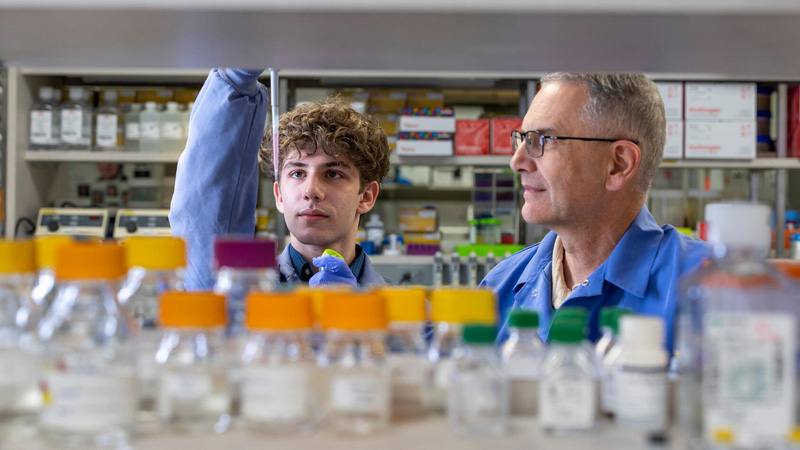
“Alan Alwakeel (left), SPARK scholar, works on research in the lab with a Mayo Clinic research scientist.

Long before he set foot in a research lab, Alan Alwakeel was already asking big questions about medicine, technology and how to bring the two together. By the time he entered Mayo Clinic’s SPARK (Science Program for the Advancement of Research Knowledge) program as a high school junior in the summer of 2024, he also was no stranger to experimenting with artificial intelligence (AI). 

Within two years, the project he began through SPARK had advanced well beyond the scope of a typical high school research experience, opening new opportunities for scientific exploration. 

SPARK is Mayo Clinic in Florida’s research mentorship program that places high school students inside working laboratories on the campus. Scholars are matched with physician-scientists and researchers to design and carry out their projects while building research, critical thinking and professional skills. 

Instead of joining an existing project as most SPARK participants do, Alan arrived with a concept that captured the attention of Mayo Clinic’s research faculty. He wanted to find a better way to identify effective cancer treatments, combining his interests in medicine and computer science. 

That idea would become the foundation of a project that moved far beyond a typical high school research experience. 

Building a ‘virtual cell’ 

As a SPARK scholar, Alan began developing an AI-powered “virtual cell” — a computational model designed to simulate how cancer cells respond to different drug combinations. He worked under the mentorship of Cui Tao, Ph.D., chair of Artificial Intelligence and Informatics Research. 

The problem Alan set out to solve is well known. Testing drug combinations in the lab takes time. With thousands of potential combinations, identifying the most effective treatments requires a highly systematic approach. 

Alan’s approach aimed to shift that process into a more automated one.  

“My goal was to create a simulation that could predict how cancer cells would respond to different therapies, allowing researchers to test hundreds of thousands of drug combinations virtually before validating the most promising ones in the lab,” he says.  

His model integrates genomic and proteomic data, running large-scale biochemical simulations to predict whether drugs will work together or interfere with one another. After building the system, Alan validated it through laboratory experiments, demonstrating strong agreement between the model’s predictions and real-world outcomes.  

From project to discovery 

As his project gained traction, Alan connected with multiple Mayo Clinic scientists, including John A. Copland III, Ph.D., whose lab supported the work to validate the performance of the virtual cell. Dr. Copland quickly recognized that Alan and his work stood out. 

“He’s done more than most people have done through a postdoctoral fellowship,” says Dr. Copland.  

 As results began to take shape, the potential of the virtual cell became clear. After presenting validation data and demonstrating the model’s accuracy, Alan and his mentors began exploring additional opportunities to refine the model and evaluate its broader research applications. 

The project marked a turning point. What began as a student-led research idea had evolved into a sophisticated technology with promising real-world implications for cancer research and drug discovery. 

Today, the team continues to assess how the model could be further developed and applied to support future scientific investigation. 

SPARK is designed to immerse students in the realities of scientific work, which can include uncertainty, skepticism and high expectations. From the outset, Alan’s mentors challenged him to prove that his idea was feasible. Rather than simplifying the project, they asked him to build the case for it himself. 

“They didn’t hold my hand through it,” he says. “They encouraged me to do all of the research myself and defend the project.” 

Learning to think like a scientist 

SPARK students are treated as colleagues, not observers, and Alan embraced that role fully.  

Rather than directing each step, Dr. Copland and his colleagues provided access to lab space, tools and expertise, allowing Alan to execute his vision. He worked across departments, integrating AI with laboratory science to create a project that spanned multiple disciplines. 

That process required him to teach himself advanced concepts in biochemistry and computational modeling, then explain and defend those ideas in front of experienced researchers. It also meant learning how to communicate professionally, work with principal investigators and navigate the demands of a real research environment.  

By the end of his senior year, Alan had accomplished things few students at any level achieve: a groundbreaking innovation, second-place Grand Award at the International Science and Engineering Fair, valedictorian at Stanton College Preparatory School and acceptance to Harvard University, where he plans to study neuroscience and computer science. 

He intends to continue working with his Mayo Clinic mentors to explore future applications of the virtual cell while pursuing his goal of becoming a physician-scientist. His work remains grounded in the belief that technology should support clinicians and improve the efficiency of care. 

“AI allows us to test possibilities at a scale that would be impossible in a traditional laboratory. It helps us focus resources on the solutions most likely to help patients,” he says.  

Related Articles


Source link

Share. Facebook Twitter Pinterest LinkedIn Tumblr Telegram Email
Previous ArticleMayo Clinic researchers report early results from therapy designed for a single patient with rare genetic form of ALS 
studyblog
  • Website

Related Posts

Mayo Clinic researchers report early results from therapy designed for a single patient with rare genetic form of ALS 

October 1, 2026

Cheating is not the problem–it’s a solution (in a zero-sum educational system)

October 1, 2026

Mayo Clinic receives gift from Penske Foundation to transform patients’ arrival experience

September 30, 2026
Add A Comment
Leave A Reply Cancel Reply

Top Posts

10 Trends From Year 2020 That Predict Business Apps Popularity

January 20, 2021

Shipping Lines Continue to Increase Fees, Firms Face More Difficulties

January 15, 2021

Qatar Airways Helps Bring Tens of Thousands of Seafarers

January 15, 2021

Subscribe to Updates

Get the latest sports news from SportsSite about soccer, football and tennis.

Vodacom Study delivers trusted insights on technology, business, finance, and education—helping you learn smarter, stay informed, and succeed in a rapidly changing world.

Facebook X (Twitter) Instagram Pinterest
Top Insights

Top UK Stocks to Watch: Capita Shares Rise as it Unveils

January 15, 2021
8.5

Digital Euro Might Suck Away 8% of Banks’ Deposits

January 12, 2021

Oil Gains on OPEC Outlook That U.S. Growth Will Slow

January 11, 2021
Get Informed

Subscribe to Updates

Get the latest creative news from FooBar about art, design and business.

© 2013 - www.vodacomstudy.com | All rights reserved
  • Home
  • Technology
  • Business
  • Get In Touch

Type above and press Enter to search. Press Esc to cancel.